Saturday, December 17, 2022

Yuletide - The Child - Joy of Man's Desiring

"Child in the manger,
Infant of Mary;
Outcast and stranger, 
Lord of all;
Child who inherits
All our transgressions,
All our demerits
On Him fall."


“But when the time had fully come, God sent his Son, born of a woman, born under law, to redeem those under law, that we might receive the full rights of sons.”

Galatians 4:4-5

There is a tendency in Christianity to downplay the humanity of Jesus.  We know and will say he was "fully human" and "fully God," but in our reading of scripture and description of the events of Jesus life, we'll often shift our focus bad to his divinity, because we know the whole story.  We know the ending, we know the full displays of his power, so it colors our view of his entire life.  

We downplay just how human he really was.

The Nativity story should put any such notion to rest.

If Jesus simply arrived on the scene as a fully grown adult and started his ministry, questions of his humanity would be justified.  Mythologies and other religions are rife with gods appearing to men.  In the scriptures themselves, we have heavenly beings appear to men.  Angels and messengers.  If Jesus appeared fully formed, it would be easy to believe he was just an angel or some other heavenly being.

This moves Jesus farther away from us.  As one who cannot relate, but instead as one who has simply come to instruct.  One whose suffering was somehow easier because of his divine ability to endure it.

But by appearing as a child, Jesus assures us of his humanity.

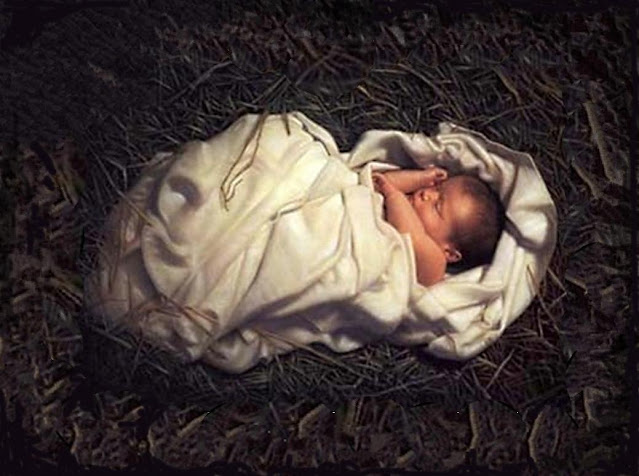
No matter how much we would like to portray his birth as a silent night, or that there was no crying that he made that night, I assure you, Jesus cried as a baby.  It would have been his only way to communicate with his parents.  

Yes, he cried, and perhaps hollered and screamed.  He wet himself.  He soiled himself.  He would have vomited.  Made messes.  Worried his human parents.  He got hungry.  Tired.  Frustrated.  Upset.

His life was messy.  Like ours.  

God Himself stepped down to earth, into a form totally dependent on human parents.  Needing their provision, their protection, their attention.  Unable to do even the simplest tasks for himself.

You can almost imagine the times he would be just like every other child.  And then, something would happen to remind Mary and Joseph of how truly special he was.

We can estimate that the rest of Jesus's childhood and young adulthood would have been similar.  We only have accounts of him as a very young child and then the account of him in the temple, around age twelve.  The rest of his formative years must have been largely uneventful, because when his ministry started, he had no notoriety.  The people who saw him grew up around them asked, "isn't that the carpenter's son?"  And his miracles that began with his ministry seemed surprising and drew attention.

Yes, the infant Jesus reminds us of how much he has in common with all of us.  How he truly can relate to us.  How he knows our struggle, and not just from an outside perspective.  He lived it.

And he lived it because of His compassion for us.  He sees our need and is moved to act.  "For God so loved..."

That's the good news that brings great joy.  That's what causes the angels to rejoice and calls for us to do the same.

Glory to God in the Highest
And on earth, peace

“For we do not have a high priest who is unable to sympathize with our weaknesses, but we have one who has been tempted in every way, just as we are—yet was without sin”

Hebrews 4:15

"Once the most holy
Child of salvation
Gently and lowly
Lived below;
Now as our glorious
Mighty Redeemer,
See Him victorious
O'er each foe."

Friday, December 16, 2022

Yuletide - Las Posadas 2022

¡Entren santos peregrinos!
¡Reciban éste rincón!
Que aunque es pobre la morada
¡Se las doy de corazón!
¡Cantemos con alegría!
¡Todos al considerar!
¡Que Jesús, José y María
nos vinieron hoy a honrar!


Come in holy pilgrims!
Receive this corner!
Because, even though the place is poor
I offer it to you from my heart!
Let's sing it with joy!
Everyone at the thought!
That Jesus, Joseph, and Mary
Came to honor us today!


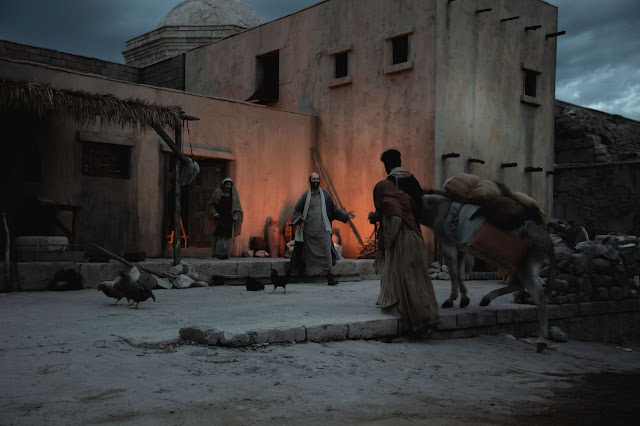
In Latin American and Hispanic Christianity, today marks the beginning of Las Posadas, a novenario, or nine day period of prayer and procession, reflecting on the journey of Joseph and Mary through Bethlehem looking for shelter.  The nine day period leading up to Christmas Day is also meant to reflect on the nine months Mary carried the Messiah.  

Las Posadas derives from the Spanish word posada, meaning lodging or accommodation, here referring to the inn in the Nativity story.  Celebration of this 400 year tradition starts with two actors dressing as Mary and Joseph, leading a procession to certain houses designated as inns, usually those at the end of a street.  The procession is headed by a leader carrying a luminaria and can often contain other players of the Nativity story (angels, shepherds, etc.).  The procession makes its way from house to house, singing carols in hopes to have a place to stay.  They are initially met with "no posada," no room, until the end of the street.  There, the residents of the houses respond by singing a song, recognizing Mary and Joseph, and allowing the procession to enter.  The procession comes in and kneels to pray before a Nativity scene.  At the end of each night, carols are sung, children break open a star shaped piñata, and everyone sits for a feast.  This is repeated throughout the nine day period, with a new house each night accepting them in for the festivities.

My introduction to Las Posadas came through The Three Caballeros.  That film was part of Disney's Good Neighbor program, an extension of the United States' government's policy at the time, designed to highlight the relationship with South America.  As a result, The Three Caballeros and its sister production, Saludos Amigos, are both a mixture of travelogue, history lesson, art appreciation, and animation.  In The Three Caballeros, both Jose Carioca and Panchito Pistoles, reveal the best aspects of their countries, Brazil and Mexico, respectively.  Panchito includes a description of Las Posadas, complete with beautiful Mary Blair, small world-esque paintings to accompany the story.  The image above includes examples of this art.

That film introduced me to the beauty of this celebration.  A real visual and tactile experience of what Mary and Joseph would have experienced that cold night.  Traveling from inn to inn looking for someplace for shelter, some place for refuge.  Repeatedly encountering doors slammed in their face.  "No room."  "No posada."

Another reminder that our sanitized version of the Christmas story leaves much to be desired.  We revere that night so much (and rightly so), that we forget it was not the safe, pleasant pageant we've made it.  It wasn't a silent night.  It wasn't likely a midnight clear.  It was cold, it was noisy, it was smelly, it was dark.  For Mary and Joseph that night held fear and trepidation.  Would they find shelter?  Would there be a safe place for Mary to bear this child?  When the only place they were offered was a stable, would it be warm enough?  Would it be enough?

It also reminds us of what our response is to be.  We are to make room for the Savior.  In doing so, we are to make room for his people.  Making room for the Savior on that first Christmas night meant providing shelter for his mom and dad.  Meeting this family in need of refuge and allowing them in.  Allowing dirty shepherds into the space to come and see him.  

It means caring for the stranger.

It means caring for the refugee.

It means treating each person with the kindness we would afford him, because they are made in his image.

It means making room.

I pray this Christmas season you make room for those in need around you.  There is a lot of need this year.  From those families still separated at the border, to those suffering from compounded depression, to those wondering where there next paycheck will come from in this uncertain year, and to those grieving loss from this pandemic.  The Christmas story is messy in order to remind us that regardless of the humble circumstances, even though our place is poor, God still stepped down into it.  And we are to do the same.

¡Entren santos peregrinos!

Thursday, December 15, 2022

Yuletide - Done in Your Name

"But soon the steeples called good people all, to church and chapel, and away they came, flocking through the streets in their best clothes, and with their gayest faces. And at the same time there emerged from scores of bye-streets, lanes, and nameless turnings, innumerable people, carrying their dinners to the bakers’ shops. The sight of these poor revellers appeared to interest the Spirit very much, for he stood with Scrooge beside him in a baker’s doorway, and taking off the covers as their bearers passed, sprinkled incense on their dinners from his torch. And it was a very uncommon kind of torch, for once or twice when there were angry words between some dinner-carriers who had jostled each other, he shed a few drops of water on them from it, and their good humour was restored directly. For they said, it was a shame to quarrel upon Christmas Day. And so it was! God love it, so it was!

In time the bells ceased, and the bakers were shut up; and yet there was a genial shadowing forth of all these dinners and the progress of their cooking, in the thawed blotch of wet above each baker’s oven; where the pavement smoked as if its stones were cooking too.

“Is there a peculiar flavour in what you sprinkle from your torch?” asked Scrooge.

“There is. My own.”

“Would it apply to any kind of dinner on this day?” asked Scrooge.

“To any kindly given. To a poor one most.”

“Why to a poor one most?” asked Scrooge.

“Because it needs it most.”

“Spirit,” said Scrooge, after a moment’s thought, “I wonder you, of all the beings in the many worlds about us, should desire to cramp these people’s opportunities of innocent enjoyment.”

“I!” cried the Spirit.

“You would deprive them of their means of dining every seventh day, often the only day on which they can be said to dine at all,” said Scrooge. “Wouldn’t you?”

“I!” cried the Spirit.

“You seek to close these places on the Seventh Day?” said Scrooge. “And it comes to the same thing.”

“I seek!” exclaimed the Spirit.

“Forgive me if I am wrong. It has been done in your name, or at least in that of your family,” said Scrooge.

“There are some upon this earth of yours,” returned the Spirit, “who lay claim to know us, and who do their deeds of passion, pride, ill-will, hatred, envy, bigotry, and selfishness in our name, who are as strange to us and all our kith and kin, as if they had never lived. Remember that, and charge their doings on themselves, not us.”"

A Christmas Carol, Charles Dickens


This passage of A Christmas Carol has become a repeated meditation in the holiday season.  A brief interlude where Scrooge seems to be thawing because of the Ghost of Christmas Present's presence, but still gets in to a lively debate regarding work, pleasure, and the efforts of the moral majority, of "good Christians" at the time.  

Scrooge recognizes that for the poor, often Sunday is their only source of enjoyment.  Their only good meal.  The strive of all their labors.  What makes it bearable, sustainable.  

Scrooge also knows that there are “blue law” efforts in his society to, under the guise of being a good “Christian” society, close all commercial shops—including bakeries—on Sundays. Accordingly, Scrooge accuses the Ghost of hypocrisy.

The Ghost of Christmas Present naturally takes offense, saying it is not he that seeks to deprive them of their means.  And Scrooge then utters the words that I want to focus on.  "It has been done in your name."

How much ill do we do in the name of Christmas?

The commercialism.  The comparison.  The holiday blues, the holiday rage.

Kris Kringle: Imagine...making a child take something it doesn’t want…just because he bought too many of the wrong toys. That’s what I’ve been fighting against for years…the way they commercialize Christmas.

Alfred: A lot of bad ‘isms’ floating around in this world…but one of the worst is commercialism. Make a buck. Make a buck. Even in Brooklyn, it’s the same. Don’t care what Christmas stands for. Just make a buck.

Alfred:  A lot of bad ‘isms’ floating around in this world…but one of the worst is commercialism.  Make a buck.  Make a buck.  Even in Brooklyn, it’s the same.  Don’t care what Christmas stands for.  Just make a buck.it doesn't want...
just because he bought
too many of the wrong toys.
That's what I've been
fighting against for years...
the way they
commercialize Christmas.
A lot of bad "isms"
floating around this world...
but one of the worst
is commercialism.
Make a buck. Make a buck.
Even in Brooklyn,
it's the same.
Don't care what Christmas
stands for.
Just make a buck.

Read more: https://www.springfieldspringfield.co.uk/movie_script.php?movie=miracle-on-34th-street

making a child take something
it doesn't want...
just because he bought
too many of the wrong toys.
That's what I've been
fighting against for years...
the way they
commercialize Christmas.
A lot of bad "isms"
floating around this world...
but one of the worst
is commercialism.
Make a buck. Make a buck.
Even in Brooklyn,
it's the same.
Don't care what Christmas
stands for.
Just make a buck.

Read more: https://www.springfieldspringfield.co.uk/movie_script.php?movie=miracle-on-34th-street
Even worse, how much ill do we do in the name of Christ?  How much ill do we do with good intentions but with horrible, inevitable effects?

How much do we associate the name of Christ with hate, with malice, with greed, with strife?

How much evil are we doing in the name of Christ by associating him with a singular political party?

Marilynne Robinson’s wrote in her novel Gilead: “We human beings do real harm. History could make a stone weep.”

The past is littered with historical evils that have been done in the name of Christ.  The Crusades, the Spanish Inquisition, forced conversions of aboriginal peoples.  Blood libel.  Slavery.

What are we doing today, what are we allowing today that is the same?  

Forced separation of migrant families seeking asylum.  

White nationalism that proclaims that God appointed a superior race.

Support for horribly damaging conversion camps because we are too afraid to have real open conversations about religion and sex, especially at younger ages when it would be most beneficial.

Division and hatred directed at half the country because fear is a great political tool.

When will we engage in the Biblical practice of lament?

More than any other, Christmas should be a time to force us to cut through all the division, all the rancor, all the strife.  To really look at what we claim in the name of the child.  What we claim in the name of the God who became man to save all.  To redeem all, to restore all.

Who appeared to the lowliest of us all, to shame the high and mighty.  Who appeared to outsiders, to the scandalous, to the wretched, to shame the pious.

“There are some upon this earth of yours,” returned the Spirit, “who lay claim to know us, and who do their deeds of passion, pride, ill-will, hatred, envy, bigotry, and selfishness in our name, who are as strange to us and all our kith and kin, as if they had never lived. Remember that, and charge their doings on themselves, not us.”

"The Advent and Christmas seasons provide those of us who claim the Christian faith with the opportunity to consider the various ways in which we—all of us, regardless of political persuasion or version of Christianity—regularly distort, twist, and often besmirch the name of the very faith we claim in ways that have nothing to do with the good news of the gospel. We all, either actively or through neglect and passivity, have been party to allowing, in the Ghost of Christmas Present’s words, “deeds of passion, pride, ill will, hatred, envy, bigotry, and selfishness [to be done] in our name.” Ebenezer Scrooge learned many things from the ghosts who visited him, but none more important than this: it is possible both to become aware of things one has been blind to and to change. May we all go and do likewise."  Vance Morgan, "It Has Been Done In Your Name: A Dickensian Tale of "Good Christians" Doing Harm


As we come forth and know Him better, may we also go and do likewise, indeed.  

And then, and only then, will God bless us, one and all.
Wednesday, December 14, 2022

Yuletide - The Ghost of Christmas Present

"Come in and know me better, man"

A Christmas Carol is a story that gets a lot of play in our house during this time of year.  We have the recent Jim Carrey motion capture version that Jamie used in class, as it is one of the most faithful adaptations.  We watch Mickey's Christmas Carol for Scrooge McDuck (lovingly homaged in last year's Ducktales Christmas episode).  We watch the derivations of the story, like Rod Serling's haunting Carol for Another Christmas or the noir Cash on Demand.  And of course, we watch the best adaptation of them all - Muppet Christmas Carol.  I'm not joking on that last part.  Michael Caine has to be one of the best Ebeneezer Scrooge's ever because he plays the role with such sincerity.  The perfect straight-man while surrounded by Muppets.  Someday soon, we'll have to catch the Indiana Repertory Theater's annual version. (Jamie was this close this year to going with a class).

Over the last several years, the Ghost of Christmas Present has become a fascinating figure to me.  A Father Christmas like figure.  A giant of a man - a symbol of plenty.  A cornucopia for a torch and a bountiful feast before him.  And through his journey he shows Scrooge the abundance of the celebration, even for those of meager means.

I also love the detail of him carrying an empty scabbard.  A symbol of the message the angels brought for this time of year, "on Earth peace, goodwill toward men."  The sword is not needed, the Savior is here.

The spirit also serves as a reminder to us of the fleeting nature of the present.  He exists only for the season and each year, a new brother is born.  In Dickens' text, it seems he lives for the Twelve Days of Christmas, as he disappears on the stroke of midnight on Twelfth Night, the eve of Epiphany or Three Kings' Day.  He is a reminder for us to "be present."  The spirit is merry because of his focus on the celebration of the night.  Unburdened by the mistakes of the past or the worries of the future, the Ghost of Christmas Present can enjoy the merriment of the season.  He can spread his light and warmth from his torch as he travels.

That is not to say that this spirit ignores the realities that many face over the holidays.  He shows Scrooge scenes of deprivation as well as plenty. And it is this spirit that gives Scrooge perhaps the most pressing warnings.  Warnings that all would do well to heed.

Toward the end of his visit, the spirit reveals to Scrooge two emaciated children, a boy and a girl, clinging to his robes. Ignorance and Want.  The boy is Ignorance and the girl is Want.  They are man's children.  "Beware them both, and all of their degree, but most of all beware this boy, for on his brow I see that written which is Doom unless the writing be erased."

The ills of Want are quite apparent.  Want represents the need we see all around us.  Homelessness, hunger, poverty, and neglect.  All social ills that we recognize and prioritize trying to address.  "Our people must learn to devote themselves to doing what is good, in order to provide for urgent needs and not live unproductive lives."  Titus 3:14  We do so, because we recognize the dark ends that Want leads to:  disease, abuse, suffering, desperation, and death.  All ends we would seek to avoid.

The ills of Ignorance are less obvious, but far more dangerous.  Ignorance prolongs and worsens Want.  For Ignorance keeps us in fear: we fear what we do not know and understand.  It is ignorance that prolongs racism, sexism, homophobia, xenophobia, religious intolerance, and hate.  For it is much easier to hate that which you do not know or understand.   It is Ignorance that looks at someone who is begging and assumes that they have not even tried to look for a job.  It is Ignorance that assumes that same person would just spend any money on alcohol or drugs.

And it is Ignorance that we first must tackle so that we can address Want.   "Desire without knowledge is not good, and whoever makes haste with his feet misses his way."  Proverbs 19:2  That is the warning of the Ghost of Christmas Present.  Why Ignorance is to be feared more.  For it is Ignorance that will bring our doom, unless it is changed.

We see this through the character of Scrooge himself.  The first thing that is changed through his travels with the spirits is his ignorance to the world around him.  Through his travels, he becomes aware of the joys and the sorrows that surround him, breaking through his narcissism and myopic greed.  Through the removal of his ignorance, his heart can be changed.  And from that, he can be moved to address the wants that are all around him.  The want of the Cratchit family for basic provisions.  Tiny Tim's want for nourishment to help heal him.  Fred's want for family connection.

May we all be present this Christmas season.  Aware of those around us and open to their needs.  May we not let ignorance lead us, but may we seek to address want where it is found and meet it. May we share our abundance and bounty with those around us.  May we embody the peace of the season and may we rejoice in it.  And may we never forget the reason for Christmas past, present, and future.

Come, let's know Him better.

Tuesday, December 13, 2022

Yuletide - King Herod and His Advisors - An Adventure in Missing the Point


"In the time of King Herod, after Jesus was born in Bethlehem of Judea, wise men from the East came to Jerusalem, asking, "Where is the child who has been born king of the Jews? For we observed his star at its rising, and have come to pay him homage." 

When King Herod heard this, he was frightened and all Jerusalem with him; and calling together all the chief priests and scribes of the people, he inquired of them where the Messiah was to be born. They told him, "In Bethlehem of Judea; for so it has been written by the prophet: 

'And you, Bethlehem, in the land of Judah, are by no means least among the rulers of Judah; for from you shall come a ruler who is to shepherd my people Israel.'" 

Then Herod secretly called for the wise men and learned from them the exact time when the star had appeared. Then he sent them to Bethlehem, saying, "Go and search diligently for the child; and when you have found him, bring me word so that I may also go and pay him homage." 

When they had heard the king, they set out; and there, ahead of them, went the star that they had seen at its rising, until it stopped over the place where the child was. When they saw that the star had stopped, they were overwhelmed with joy. On entering the house, they saw the child with Mary his mother; and they knelt down and paid him homage. Then, opening their treasure chests, they offered him gifts of gold, frankincense, and myrrh. And having been warned in a dream not to return to Herod, they left for their own country by another path."
Matthew 2:1-12

It's important to counter the Magi's presence in the story with the people that they questioned first - King Herod and his advisors.  Their reaction is so completely opposite to that of these wise men, that they cannot be ignored.

Primarily, Herod serves an important function in the story because it grounds the Nativity in history.  Like most of Luke's writings, it provides a verifiable historical context to the Gospel account and allows us to compare and prove Jesus's place in history.  Historians agree that Herod in many respects had a very successful reign.  Ethnically Idumaean, or Edomite, but at least nominally of Jewish practice, he increased the land he governed from Palestine to parts of modern Jordan, Lebanon and Syria, constructing fortresses, aqueducts and amphitheaters.  

His connections to Julius Caesar and Caesar Augustus would provide  both comfort and strife.  He was given the title “King of the Jews” by Caesar because of the Jewish population he ruled, to their consternation.  Like most kings, he wanted more and more power.  This pushed him to rule with an iron fist and led to increasing levels of paranoia.  He executed many of his own family to stave off what he saw as threats to his rule.

He has been described as "perhaps the only figure in ancient Jewish history who has been loathed equally by Jewish and Christian posterity," "the evil genius of the Judean nation," and as one who would be "prepared to commit any crime in order to gratify his unbounded ambition."

Perhaps now we can understand better why news of a new Jewish king being born would be so troubling to him.  Jesus represented the one thing he feared the most in the world: losing his position of power and authority.

If Herod's response to this baby king is one of fear and anger, his advisors response seems to be one of apathy.

When the wise men ask Herod where the child was prophesied to be born, he then turns to the chief priests and scribes.  Their response, or lack thereof, is the most interesting part of this account.  Of course they of all people would know the scriptures, and would know the prophecies.  They knew everything about the coming Messiah.  They could have answered any question about the Messiah that had been posed to them.

They simply had no desire to seek him out.

Think about it.  They saw the same star in the heavens as the wise men.  They saw it centered over Bethlehem.  They had to know something significant was occurring in the stars.  The Magi's story would have filled in important pieces of their own observations.  

But for whatever reason, they didn't care enough to find out exactly what was happening.

We don't know if it was fear of Herod that kept them from acting.  That would have been a perfectly rational response.  They knew everything Herod did to keep power, and would have been rightly afraid of his reaction.

Perhaps they were so wrapped up in their own power and position that they never even paid attention to the star.  Perhaps even after hearing the story of the Magi, they no longer had any inclination to seek the Messiah.  After all, God had been silent for 400 years, why would he show up to outsiders and not them?

For whatever reason, their response to the Magi's tale was silence and inaction.  They did nothing.  They heard of the possibility of the arrival of the Messiah and they flat out ignored it.

It's a stark reminder for us to not ignore the signs around us.  To not ignore where the Lord is working around us.  

To expect Him.  And to seek Him out.

As wise men still do.

Monday, December 12, 2022

Yuletide - The Magi - From Reason to Faith

"Bringing our gifts for the newborn Savior 
All that we have, whether costly or meek 
Because we believe 
Gold for his honor, and frankincense for his pleasure 
And myrrh for the cross he will suffer 
Do you believe? 
Is this who we've waited for?"


"In the time of King Herod, after Jesus was born in Bethlehem of Judea, wise men from the East came to Jerusalem, asking, "Where is the child who has been born king of the Jews? For we observed his star at its rising, and have come to pay him homage." 


When King Herod heard this, he was frightened and all Jerusalem with him; and calling together all the chief priests and scribes of the people, he inquired of them where the Messiah was to be born. They told him, "In Bethlehem of Judea; for so it has been written by the prophet: 

'And you, Bethlehem, in the land of Judah, are by no means least among the rulers of Judah; for from you shall come a ruler who is to shepherd my people Israel.'" 

Then Herod secretly called for the wise men and learned from them the exact time when the star had appeared. Then he sent them to Bethlehem, saying, "Go and search diligently for the child; and when you have found him, bring me word so that I may also go and pay him homage." 

When they had heard the king, they set out; and there, ahead of them, went the star that they had seen at its rising, until it stopped over the place where the child was. When they saw that the star had stopped, they were overwhelmed with joy. On entering the house, they saw the child with Mary his mother; and they knelt down and paid him homage. Then, opening their treasure chests, they offered him gifts of gold, frankincense, and myrrh. And having been warned in a dream not to return to Herod, they left for their own country by another path."
Matthew 2:1-12

Continuing in the biblical story of Jesus's birth, we have to jump for the account of the visit of the Magi.  

There are many facts about this encounter that are left unexplained.  First, we don't know exactly when they arrived.  They likely arrived several months after the birth of Jesus.  We don't know exactly how many, but it could be as much as twenty-four months or two years.   So, despite what your nativity scene may show, the Magi were not present at the stable.  

Further, we don't know exactly how many Magi traveled to meet the child.  Our songs and some traditions assume three because of the three gifts that they brought.  Other traditions include as many as twelve.  

We don't know exactly where they came from.  It is indicated that they came from the East, but there is no further indication of the region.  Many believe they could come from the areas of Persia or even India.

We don't know what they rode. whether camels or donkeys.  We don't know their names, though some are ascribed to them.  We don't know their fates.  We just see their importance in the birth story.

For the Magi represent a common thread in scriptures: the idea of the righteous outsider.  

The idea of someone outside the faith, outside the Israelite nation, who saw the power of Almighty God and believed.  Often, especially when the Israelites, the chosen themselves did not see it or believe.

Though the Magi came from another faith, likely Zoroastrianism, they recognized the importance of the signs in the heavens that they witnessed.  They recognized the majesty and wonder of the star and came asking "Where is the child?  Where is the one born King of the Jews?"  The priests, the Levites, the Jewish rulers of the day undoubtedly had see the same star, had seen the same signs in the heavens.  But only the Magi recognized their importance and felt compelled to do something about it.

The Magi, to me, also represent the idea of how wisdom and reason can lead to faith.  Despite the often insistence of Conservative Christianity that science and faith are diametrically opposed, the pursuit of knowledge has been one of the many paths that has led several of our important theological figures to belief.  C.S. Lewis famously turned from atheism to faith through reason.  Several current writers have made their notoriety in making A Case for Christ or stating that they Don't Have Enough Faith to be an Atheist.  People whose pursuit of knowledge, pursuit of wisdom, and intellectual curiosity lead them to Christ.

It's as if in many churches we forget there are Intuitive and Feeling personality types.  We get those who come to Christ through an emotional appeal. Who hear that great conversion story and are moved by it.

We're not sure what to do with those who respond more to facts than to emotions.  Who won't accept easy answers.  Who will question and will push and dig further and further into the historicity of scripture, the battles in church history, canonicity, and translation, and tradition.  Who will challenge the system.

We have to be better equipped to answer both.

The Magi remind us why.  The Magi's knowledge of astronomy and astrology led them to understand the significance of what they saw in the stars.  Their knowledge of other religions led them to understand the importance that this sign meant to the Jewish people.  Their intellectual curiosity spurred them out of their laboratories and studies and into the West to see what would warrant such a display.

In their intelligence, they brought gifts perfectly suited for the new Messiah.  Gold, a gift for a king, for royalty.  Frankincense, a gift for a god, for divinity.  Myrrh,  a gift for the dead, for a sacrifice.  All costly, and all significant.

Oh that we could share in that same wisdom.  In that same curiosity, which pushes us to pursue the Christ child further and further.

And which leads us to share in that exceeding great joy of discovery.

Sunday, December 11, 2022

Third Sunday of Advent 2022 - See Amid the Winter's Snow

On the third Sunday of advent, we celebrate the joy of the coming Savior.  This is Gaudete Sunday - Gaudete in Domino semper; Rejoice in the Lord Always.  The exceeding great joy of knowing that you are unconditionally loved by the Father and that nothing - not sickness, failure, emotional distress, oppression, war, or even death - can take that love away.

"Rejoice in the Lord always; again I say, rejoice.  Let your forbearance be known to all, for the Lord is near at hand; have no anxiety about anything, but in all things, by prayer and supplication, with thanksgiving, let your requests be known to God.  Lord, you have blessed your land; you have turned away the captivity of Jacob."

Phillipians 4:4-6; Psalm 85:1

And there were shepherds living out in the fields nearby, keeping watch over their flocks at night. An angel of the Lord appeared to them, and the glory of the Lord shone around them, and they were terrified. But the angel said to them, "Do not be afraid. I bring you good news that will cause great joy for all the people. Today in the town of David a Savior has been born to you; he is the Messiah, the Lord. This will be a sign to you: You will find a baby wrapped in cloths and lying in a manger." Suddenly a great company of the heavenly host appeared with the angel, praising God and saying, "Glory to God in the highest heaven, and on earth peace to those on whom his favor rests."
Luke 2:8-14

When they saw the star, they were overjoyed. On coming to the house, they saw the child with his mother Mary, and they bowed down and worshiped him. Then they opened their treasures and presented him with gifts of gold, frankincense and myrrh.
Matthew 2:10-11

I love this last one, especially as overjoyed seems to undersell it.  Older translations put that the magi rejoiced "with exceeding great joy."  These were scholars who travelled far and brought expensive gifts simply to worship at the new Messiah.  These magi even told the priests and the scribes, the very people who had been longing for a Messiah, that the signs were in the heavens.  The scribes and priests even pointed the magi in the right direction of Bethlehem, but were not interested enough to go and see what might be going on.  Because the magi continued onward, their joy was fulfilled.  And they rejoiced with exceeding great joy.

May this be a Sunday of exceeding great joy for you and yours and may the joy of this season carry you forward in your days to come.

Saturday, December 10, 2022

Yuletide - Christmas Trees


(A Christmas Circular Letter)

The city had withdrawn into itself
And left at last the country to the country;
When between whirls of snow not come to lie
And whirls of foliage not yet laid, there drove
A stranger to our yard, who looked the city
Yet did in country fashion that was there
He sat and waited till he drew us out
A-buttoning coats to ask him who he was.
He proved to be the city come agin
To look for something he had left behind
And could not do without and keep its Christmas.
He asked if I would sell my Christmas trees;
My woods - the young fir balsams like a place
Where houses all are the churches and have spires.
I hand't thought of them as Christmas Trees.
I doubt if I was tempted for a moment
To sell them off their feet to go in cars
And leave the slope behind the house all bare,
When the sun shines now no warmer than the moon.
I'd hate to have them know it if I was.
Yet more I'd hate to hold my trees except
As others hold theirs or refuse for them,
Beyond the time of profitable growth,
The trial by market everything must come to.
I dallied so much with the thought of selling.
Then whether from mistaken courtesy
And fear of seeming short of speech, or whether
From hope of hearing good of what was mine,
I said, "There aren't enough to be worth while."
"I could soon tell how many they would cut,
You let me look them over."

                                                "You could look.
But I don't expect I'm going to let you have them."
Pasture they spring in, some in clumps too close
That lop each other of boughs, but not a few
Quite solitary and having equal bough
All round and round.  The latter he nodded "yes" to,
Or paused to say beneath some lovelier one,
With a buyer's moderation, "That would do,"
I thought so too, but wasn't there to say so.
We climbed the pasture on the south, crossed over,
And came down on the north.

                                                He said, "A thousand."

"A thousand Christmas trees! - at what apiece?"

He felt some need of softening that to me:
"A thousand trees would come to thirty dollars."

Then I was certain I had never meant
To let him have them.  Never show surprise!
But thirty dollars seemed so small beside
The extent of pasture I should strip, three cents
(For that was all they figured out apiece),
Three cents so small beside the dollar friends
I should be writing to within the hour
Would pay in cities for good trees like those,
Regular vestry-trees whole Sunday Schools
Could hand enough on to pick off enough.
A thousand Christmas trees I didn't know I had!
Worth three cents more to give away than sell,
As may be shown by a simple calculation.
Too bad I couldn't lay one in a letter.
I can't help wishing I could send you one,
In wishing you herewith a Merry Christmas.

Robert Frost, "Christmas Trees (A Christmas Circular Letter)," Mountain Interval, 1916

This has been an interesting year for us with Christmas trees, but it has been a good one.  Our first experience with a live tree has turned out differently than we thought, but has been a beautiful thing.  More handmade decorations and more attention to what can be placed where, but still joyous and festive.  A bit like this entire holiday season - different, but beautiful and joyous.

I hope the same can be said of your season.  What ever else it looks like, may it be beautiful and joyous.

"O Christmas Tree, O Christmas Tree
How lovely are your branches"

Friday, December 9, 2022

Yuletide - The Shepherds - The Unlikeliest Heralds

"Shepherds in the fields abiding
Watching o'er your flocks by night
God with man is now residing;
Yonder shines the infant light:

Come and worship
Come and worship
Worship Christ the newborn king"


"And in the same region there were shepherds out in the field, keeping watch over their flock by night.  And an angel of the Lord appeared to them, and the glory of the Lord shone around them, and they were filled with great fear.  And the angel said to them, 'Fear not, for behold, I bring you good news of great joy that will be for all the people.  For unto you is born this day in the city of David a Savior, who is Christ the Lord.  And this will be a sign for you: you will find a baby wrapped in swaddling cloths and lying in a manger.'  And suddenly there was with the angel a multitude of the heavenly host praising God and saying,

'Glory to God in the highest,
and on earth peace among those with whom he is pleased!'

When the angels went away from them into heaven, the shepherds said to one another, 'Let us go over to Bethlehem and see this thing that has happened, which the Lord has made known to us.'  And they went with haste and found Mary and Joseph, and the baby lying in a manger.  And when they saw it, they made known the saying that had been told them concerning this child.  And all who heard it wondered at what the shepherds told them.  But Mary treasured up all these things, pondering them in her heart.  And the shepherds returned, glorifying and praising God for all they had heard and seen, as it had been told them."

Luke 2:8-20

Once Mary and Joseph have gotten settled in to the stable and the delivery begins, the scene of the Nativity story shifts to the fields outside Bethlehem.  To a group of societal outsiders, to some of the lowliest of all Israelites - the shepherds.

Shepherds stood at the bottom rung of the social ladder, along with tax collectors and dung sweepers.  The were dirty.  They were smelly.  They spent way too much time with animals.  And there were rumors about what they did with the sheep.  

They were no one's desired guest.

But God.

The first people to receive the birth announcement for God's only son were shepherds.  Poor, humble, lowly shepherds.  God bypassed the priests, the Levites, the ruling class, even the middle class to send his angels directly to the most humble of them all.

We should pause and ask why.  Why send this message to the shepherds, of all people?  

Perhaps because they were the ones most likely to listen.  

We see it later in the story that when the ruling class was confronted with the signs of the Messiahs birth, they knew the answers, they knew the prophecies.  But they had no interest in finding out whether He had arrived.

The shepherds upon hearing the fantastic news that the promised savior had been born immediately went and sought him out.

There's also likely another, poetic reason why these shepherds in particular were singled out.  If we look to the Mishnah, the Jewish rabbinical legal-history document, we see that these shepherds were no ordinary shepherds.  For they were watching no ordinary flock.  

During those times, sacrificial lambs for the burnt offerings, peace offerings, and Passover offerings were kept in the region of Jerusalem, including Bethlehem, which was just five miles south of the city. These sheep were kept outside year round and watched particularly carefully to keep them without blemish or spot. That means it is likely that these shepherds were watching over the sacrificial flock.

So you can see the beauty in the shepherds who watched the sacrificial flock being told that the Lamb who takes away the sins of the world has been born.  They are shown the next sheep to protect.  They are shown the one who will make their jobs unnecessary.

Regardless of their specific function, the shepherds remind us that the Christmas story is not just for us.  It is not just for the ones who are religiously together.  It's for the dirty.  It's for the hurting.  It's for the outcasts, the strays, the undesired.  

The beauty of the shepherds is that they remind us the Christmas story is for all of us, every one.  

Our part is to determine what we do with it.  

Fear not, we are told, good news of great joy which will be to all the people.  

Do we go and see?

Do we go tell it from the mountain?

Thursday, December 8, 2022

Yuletide - The Innkeepers - Make Him Room

"No beautiful chamber,
No soft cradle bed,
No place but a manger,
Nowhere for His head;
No praises of gladness,
No tho't of their sin,
No glory but sadness,
No room in the inn."


"In those days a decree went out from Caesar Augustus that all the world should be registered.  This was the first registration when Quirinius was governor of Syria.  And all went to be registered, each to his own town.  And Joseph also went up from Galilee, from the town of Nazareth, to Judea, to the city of David, which is called Bethlehem, because he was of the house and lineage of David, to be registered with Mary, his betrothed, who was with child.  And while they were there, the time came for her to give birth.  And she gave birth to her firstborn son and wrapped him in swaddling cloths and laid him in a manger, because there was no place for them in the inn."

Luke 2:1-7

Our Christmas story often has another set of characters that pops into the story next.  A set of innkeepers that keep telling Mary and Joseph that they have "No Room."  The process is repeated over and over until one innkeeper finally makes room for them in his stable or barn.  

It makes for great pageantry.  Perhaps we can even see it best in the annual festival of Las Posadas, or The Inns, celebrated in Latin American countries and cultures.  Las Posadas derives from the Spanish word posada, meaning lodging or accommodation, here referring to the inn in the Nativity story.  Celebration of this 400 year tradition starts with two actors dressing as Mary and Joseph, leading a procession to certain houses designated as inns, usually those at the end of a street.  The procession is headed by a leader carrying a luminaria and can often contain other players of the Nativity story (angels, shepherds, etc.).  The procession makes its way from house to house, singing carols in hopes to have a place to stay.  They are initially met with "no posada," no room, until the end of the street.  There, the residents of the houses respond by singing a song, recognizing Mary and Joseph, and allowing the procession to enter.  The procession comes in and kneels to pray before a Nativity scene.  At the end of each night, carols are sung, children break open a star shaped piñata, and everyone sits for a feast.  This is repeated throughout the nine day period, with a new house each night accepting them in for the festivities.

Despite the longevity of this celebration and the widespread nature of the idea of the innkeepers, this is not necessarily how it went in Mary and Joseph's day.  The word translated as “inn” in the scripture can also be translated as an  upper, finished room of a house.  If this were the intent, then our innkeeper could have actually been relative of Joseph.  He didn’t have any place for Joseph and Mary to stay upstairs, as would be traditional.  Instead they had to stay in the cold, unfinished lower part of the house where the animals would be.  In a cave that would have been used for the animals.  Exposed to the weather, to the stench, to the filth of being with the livestock.

This makes a lot of sense in Jewish culture.  If Joseph had relatives still in Bethlehem, that is where he would seek lodging first.  Hospitality was of the utmost importance, and it would be especially extended to family.  If Joseph had no family left in the area, then he would be seeking shelter at an inn as we think of it.

Either way, the innkeeper should not be blamed for the lack of room. The city was overwhelmed by the census, not because of an inhospitable innkeeper or the like.  Rather because of circumstance and so that prophecy could be fulfilled.  

The lesson still remains the same.  No matter the reason for the crowding, the call is to make room.  To find a place.

Nearly every example Jesus gives us of meeting the needs of our fellow man comes at an inopportune time for the person rendering aid.  The Good Samaritan hurrying off a treacherous road, interrupted by the dying man needing aid.  Not allowing followers to bury their dead or say farewell to those at home.  Leaving the 99 to find the one lost sheep.

Jesus' ministry was filled with interruptions.  To feed his followers, to heal their infirmities, to dote on their children.  

Our lives can be so overcrowded.  With school, with work, with family, with church.  Have you ever been so overburdened with church activities that you miss God all together?  We have to be able to make room for those moments when God is looking to step in and wants us to join him.  For God to truly direct our paths and move us into tangents, into distractions, into diversions.  

To meet people and God where they are.

To find room for them in our lives.

Wednesday, December 7, 2022

Pearl Harbor 2022

"Yesterday, December 7, 1941 - a date which will live in infamy - the United States of America was suddenly and deliberately attacked by naval and air forces of the Empire of Japan.

The United States was at peace with that nation and, at the solicitation of Japan, was still in conversation with its Government and its Emperor looking toward the maintenance of peace in the Pacific. Indeed, one hour after Japanese air squadrons had commenced bombing in Oahu, the Japanese Ambassador to the United States and his colleague delivered to the Secretary of State a formal reply to a recent American message. While this reply stated that it seemed useless to continue the existing diplomatic negotiations, it contained no threat or hint of war or armed attack.

It will be recorded that the distance of Hawaii from Japan makes it obvious that the attack was deliberately planned many days or even weeks ago. During the intervening time the Japanese Government has deliberately sought to deceive the United States by false statements and expressions of hope for continued peace.

The attack yesterday on the Hawaiian Islands has caused severe damage to American naval and military forces. Very many American lives have been lost. In addition American ships have been reported torpedoed on the high seas between San Francisco and Honolulu.

Yesterday the Japanese Government also launched an attack against Malaya. Last night Japanese forces attacked Hong Kong. Last night Japanese forces attacked Guam. Last night Japanese forces attacked the Philippine Islands. Last night the Japanese attacked Wake Island. This morning the Japanese attacked Midway Island.

Japan has, therefore, undertaken a surprise offensive extending throughout the Pacific area. The facts of yesterday speak for themselves. The people of the United States have already formed their opinions and well understand the implications to the very life and safety of our nation.

As Commander-in-Chief of the Army and Navy, I have directed that all measures be taken for our defense.

Always will we remember the character of the onslaught against us. No matter how long it may take us to overcome this premeditated invasion, the American people in their righteous might will win through to absolute victory.

I believe I interpret the will of the Congress and of the people when I assert that we will not only defend ourselves to the uttermost but will make very certain that this form of treachery shall never endanger us again.

Hostilities exist. There is no blinking at the fact that our people, our territory and our interests are in grave danger.

With confidence in our armed forces - with the unbounded determination of our people - we will gain the inevitable triumph - so help us God.

I ask that the Congress declare that since the unprovoked and dastardly attack by Japan on Sunday, December seventh, a state of war has existed between the United States and the Japanese Empire.
"

President Franklin D. Roosevelt, December 8, 1941

81 years.

May we never forget.

We lost 2,402 lives in the attack on Pearl Harbor.  And from that we've seen what we can do when we are united.

Let's keep that in mind.

Tuesday, December 6, 2022

Yuletide - Joseph - The Adopted Father

"This is how the birth of Jesus the Messiah came about: His mother Mary was pledged to be married to Joseph, but before they came together, she was found to be pregnant through the Holy Spirit.  Because Joseph her husband was faithful to the law, and yet did not want to expose her to public disgrace, he had in mind to divorce her quietly.

But after he had considered this, an angel of the Lord appeared to him in a dream and said, 'Joseph son of David, do not be afraid to take Mary home as your wife, because what is conceived in her is from the Holy Spirit.  She will give birth to a son, and you are to give him the name Jesus, because he will save his people from their sins.'

All this took place to fulfill what the Lord had said through the prophet: 'The virgin will conceive and give birth to a son, and they will call him Immanuel' (which means 'God with us').

When Joseph woke up, he did what the angel of the Lord had commanded him and took Mary home as his wife.  But he did not consummate their marriage until she gave birth to a son. And he gave him the name Jesus.
"

Matthew 1:18-25


Since becoming a father, I've thought a lot about Joseph at Christmas.  The focus of what becoming a father will do to you.  Understanding his position in the story just a little bit better.

He is certainly an enigmatic figure.  We know less about him than we do of Mary and he has a far smaller written role in the life of Jesus than she does.  We know his lineage, tying him to the house of David and requiring him to go to Bethlehem to be taxed/counted.  We know he was a carpenter, or craftsman.  We know he was a just and faithful man.  Beyond that, all we know of him is what happens to him in the early chapters of Matthew and Luke.  The birth, the flight to Egypt, and Jesus at the temple.  From there his story ends.

Some assume that Joseph died before Jesus' ministry ever started.  We know he was not present at the Crucifixion.  If he were, Joseph would have assumed care of his son's body, and Jesus would not have asked John to watch over his mother, Mary.  When exactly Joseph died or by what cause is unknown.

In the greater apocrypha, he is portrayed as an old man, even as old as 90 years old at the time of his betrothal to Mary.  These portrayals are found in the texts that maintain the perpetual virginity of Mary.  Accordingly, James, Joses, Simeon, and Judah/Jude/Judas, and their sisters are claimed to be children from a previous marriage, the step-siblings of Jesus if you will.

Modern protestant view tends to portray him a little younger.  Closer in age to Mary, still in the prime of his life.  That James, Joses, Simeon, and Judah would be the children of Joseph and Mary.  

Whatever the additional details of his life, I can't help but place myself in his position.  The mix of emotions he must have felt when he learned Mary was pregnant.  The awe of the angel's statement.  All leading him to a dark stable, on a cold night, holding this little child that has been entrusted to his care.  Knowing the greatness this child is called to.

There's a song written a few years ago by Mercy Me called Joseph's Lullaby.  A song written from the perspective of Joseph as he sings Jesus to sleep.  It has a line that has haunted me since the first time I heard it.

Go to sleep my Son
This manger for your bed
You have a long road before You
Rest Your little head

Can You feel the weight of Your glory?
Do You understand the price?
Or does the Father guard Your heart for now
So You can sleep tonight?

Go to sleep my Son
Go and chase Your dreams
This world can wait for one more moment
Go and sleep in peace

I believe the glory of Heaven
Is lying in my arms tonight
But Lord, I ask that He for just this moment
Simply be my child


Go to sleep my Son
Baby, close Your eyes
Soon enough You'll save the day
But for now, dear Child of mine
Oh my Jesus, Sleep tight


All the questions that come from looking at an infant child who is the Son of God.  Finally realizing the weight of that statement.  And Joseph's simple request - for one moment, can he just be mine?  Everything else will come, everything else will happen, but can he just be mine right now?  Can he be spared the crushing weight of expectation for one minute?

How often did Joseph and Mary wish to spare Jesus from his destiny?  Did they try to talk him into a safer life?  How often did they pray for his protection, even at the expense of his mission? 

How often did they beg God to spare Jesus from His plan?

I know this is probably not the most appropriate Christian response, but looking over my children and knowing what I would do to protect them, I can imagine the answer is often and frequently.

I know kids need to learn overcoming difficulty and hardship, but every parent, if they knew their children would face real suffering, would face terminal illnesses, agonizing pain, overwhelming hardship, would beg to take their place.

These thoughts take on even greater significance as we are now waiting in the adoption process.  I can imagine the same questions for the child we will adopt.  Can they be free of the brokenness inherent in adoption for just one moment?  Can they just be our child, without the baggage that will be carried around with them?

It puts new perspective on what it must have been like as the adoptive father in this story.  To be the one appointed to watch over Jesus.  To raise him, to teach him a trade, and to set him out on his ministry.

I think there is a little poetry in why Joseph, a carpenter or craftsman was chosen.  God the master craftsman sent his son to a carpenter to apprentice.  Picturing Joseph teaching Jesus how to create, how to restore, how to reuse.  How to repair the broken.  

A picture of our adoptive Father.  What he wants to teach us.  How He restores.  How He repairs.   How He creates.

How great the father's love, indeed.

Monday, December 5, 2022

Yuletide - Mary - Just An Ordinary Girl

"Why her, she's just an ordinary girl?"

A Strange Way to Save the World, Mark Harris

"In the sixth month the angel Gabriel was sent from God to a city of Galilee named Nazareth, to a virgin betrothed to a man whose name was Joseph, of the house of David. And the virgin's name was Mary.  And he came to her and said, 'Greetings, O favored one, the Lord is with you!'  But she was greatly troubled at the saying, and tried to discern what sort of greeting this might be.  And the angel said to her, 'Do not be afraid, Mary, for you have found favor with God.   And behold, you will conceive in your womb and bear a son, and you shall call his name Jesus.  He will be great and will be called the Son of the Most High. And the Lord God will give to him the throne of his father David, and he will reign over the house of Jacob forever, and of his kingdom there will be no end.'

And Mary said to the angel, 'How will this be, since I am a virgin?'

And the angel answered her, 'The Holy Spirit will come upon you, and the power of the Most High will overshadow you; therefore the child to be born will be called holy—the Son of God.  And behold, your relative Elizabeth in her old age has also conceived a son, and this is the sixth month with her who was called barren.  For nothing will be impossible with God.'  And Mary said, 'Behold, I am the servant of the Lord; let it be to me according to your word.' And the angel departed from her."

Luke 1:26-38

Mary rightly receives a lot of attention at this time of year, but I wonder if we often gloss over what makes her story so amazing.  We focus so much on the miracle, on the extraordinary circumstances and the details of the birth that make it so amazing, but do we pay attention to the character of Mary and how we should relate to her?

Because, from what I see of the story, Mary was the most ordinary of girls.  We know little of her life from the gospel account.  We know she was living with her family in the betrothal stage of her marriage to Joseph.  At the time, Mary could have been betrothed as early as age twelve and there are apocryphal accounts that she was only 12-14 at the time of the Annunciation.  We know that she was a virgin at the time, that she was faithful.  We know that she was from Nazareth.

Nazareth at that time was a city of no prominence.  Though it is mentioned in the Gospels, there are no contemporaneous mentions of Nazareth.  It does not appear in other writings until 200 AD.  It was a town of around likely 400-500 people.  A town in the hills of Galilee.  A poor farming town.  It was the country.  To the point where it was even asked "Can anything good come out of Nazareth?"

An ordinary girl, in an ordinary town, in the most ordinary of circumstances.

Until God...

Until God steps into the most ordinary of circumstances to do the extraordinary.

I know there are those that would venerate Mary.  To make her sinless.  To make her a perpetual virgin.  To make her already extraordinary, set apart by God.  And while I don't want to deny their beliefs, I think that misses the mark of her story.

She's supposed to be us.  To represent what God could do through any of us, if we found his favor.  If we were willing to say "let it be to me according to your word."  That no matter our beginnings, no matter our location, no matter our circumstances, God can make something wonderful.  Something miraculous, something extraordinary.

It's Mary's statement, "let it be to me according to your word," that reveals her extraordinary character.  Her willingness to follow God wherever He led her is her most amazing attribute.  Because what the angel was telling her would bring shame on her and her family.  At its most benign, it made her the subject of gossip and whispers.  It brought slander to her character.  It could mean the dissolution of her betrothal.  If that happened, it could make her an unfit candidate for marriage of any kind, leaving her destitute, should her family refused to keep her.  At the absolute worst, it could mean her death for her "unfaithfulness."

We don't see Mary fight back against any of this.  She simply says, "let it be done."

To have that kind of faith!

It can be so hard for us to serve when it's merely mildly inconvenient.  We're so concerned God is going to send us to Africa or China if he calls us, that we're turning away from even going across the street.  We hold on to so many reasons holding us back - family, jobs, status, comfort, prejudice, tradition, relationships - when God is waiting for us to cut through it all with a simple, "Here am I, send me!"

Or perhaps worse, we make it about ourselves.  We make ourselves important people needing to be seen and known as doing great things.  To be visible.  To be prominent.  To always be pictured as someone on the right side of pious.  To be known for being a good person, having the right beliefs, attending the right church, doing the right things, voting correctly, fitting in just squarely.  Associated with the right people.  We have no time for when things get messy or uncomfortable.  We're sticking to our plan.

What would we see if Christians went back to being ordinary people used by God for extraordinary things?

What if we weren't afraid of messy?  Of inconvenient?

Think about it, the Christmas story starts with an all too common scenario that we look down our noses at today.  An unplanned, likely teenage pregnancy.  A rushed and hushed marriage.  

Do we really grasp that?  God's plan for Mary's life was going to subject her to lies and slander about her character.  She was going to be known for her lifetime in her hometown as unfaithful.  There would be questions and rumors about exactly who she slept with.  Joseph would likely be looked upon as either the one who couldn't wait or as weak for not exacting his remedy for her unfaithfulness.

God's plan made their lives extremely messy.  It subjected them to the disappointment of their family and friends.  Mary had to know this, she had to be imagining this.  And yet, she said, "let it be."

Are we willing to do the same?

Sunday, December 4, 2022

Second Sunday of Advent 2022 - Behold, A Branch is Growing

Today marks the second Sunday of Advent.  A time that used to reflect on the preparations made for the arrival of the Messiah.  Of the birth of John the Baptist, he who would prepare a way for the Lord.

A voice of one calling:
"In the wilderness prepare 
the way for the Lord;
make straight in the desert 
a highway for our God.
Every valley shall be raised up, 
every mountain and hill made low;
the rough ground shall become level,
the rugged places a plain.
And the glory of the Lord will be revealed,
and all people will see it together.
For the mouth of the Lord has spoken."

Isaiah 40:3-5

Praise be to the Lord God, the God of Israel who alone does marvelous deeds.
Psalm 72:18


In the sixth month of Elizabeth’s pregnancy, God sent the angel Gabriel to Nazareth, a town in Galilee, to a virgin pledged to be married to a man named Joseph, a descendant of David. The virgin’s name was Mary. The angel went to her and said, “Greetings, you who are highly favored! The Lord is with you.”

Mary was greatly troubled at his words and wondered what kind of greeting this might be. But the angel said to her, “Do not be afraid, Mary; you have found favor with God. You will conceive and give birth to a son, and you are to call him Jesus. He will be great and will be called the Son of the Most High. The Lord God will give him the throne of his father David, and he will reign over Jacob’s descendants forever; his kingdom will never end.”

“How will this be,” Mary asked the angel, “since I am a virgin?”

The angel answered, “The Holy Spirit will come on you, and the power of the Most High will overshadow you. So the holy one to be born will be called[a] the Son of God. Even Elizabeth your relative is going to have a child in her old age, and she who was said to be unable to conceive is in her sixth month. For no word from God will ever fail.”

“I am the Lord’s servant,” Mary answered. “May your word to me be fulfilled.” Then the angel left her.

Luke 1:26-38

As I’ve explored this week, I've always loved the comparison in the miracles of the birth of John and of Jesus.  Though they are not of the same level, through them we see the breadth of the work of God - to bring forth life from the dead and to bring forth life from nothingness. To restore and rejuvenate, as well as to completely create from new.  A beautiful reminder that no matter where we may be in our lives, God can prepare a way.

May we prepare that way today. 

Saturday, December 3, 2022

Yuletide - Elizabeth - Life from Death

"The angel answered, 'The Holy Spirit will come on you, and the power of the Most High will overshadow you.  So the holy one to be born will be called the Son of God.  Even Elizabeth your relative is going to have a child in her old age, and she who was said to be unable to conceive is in her sixth month.  For no word from God will ever fail.'"

Luke 1:35-36

I've recently been fascinated by the pairing of the stories of the pregnancies of Elizabeth and Mary.  Mary's story rightly gets told and proclaimed throughout this time of year.  But Elizabeth's is often forgotten.  And it's the pairing of these two stories that show the full power of God.

Elizabeth's story is very brief; her only mentions throughout scripture are wholly contained in the first chapter of Luke.  We know that she was a descendant of Aaron.  That she is married to Zechariah.  That she was "well along in years."  That she was childless.

And we know she had prayed for a child.

In the very beginning of this Christmas story, before the angel speaks to Mary, we see God speak to his people for the very first time in over four hundred years.  His angel appears to Zechariah and lets him know that Elizabeth will conceive and give birth to John.

A promise fulfilled.

We focus on Mary's story because we find it the more miraculous.  The child is conceived immaculately.  Life is created from nothing.

But the story is even more astounding when paired with Elizabeth's pregnancy.  With Elizabeth, life comes from the dead.  From the barren.  Resurrection.

In Elizabeth and Mary, we see God creating.  From death and from nothing.  The Redeemer and the Creator.  Alpha and Omega.  Beginning and End.

In other mythologies, a common theme are the three sisters.  The weird sisters, the kindly ones, the norns, the fates, the furies.  Mother, maiden, and crone.

In this Christmas story, we see maiden and crone both becoming mother.  Life coming forth from beginning and end.

For no word from God will ever fail.

Friday, December 2, 2022

Yuletide - Zechariah - I Heard You

"And there appeared to him an angel of the Lord standing on the right side of the altar of incense.  And Zechariah was troubled when he saw him, and fear fell upon him.  But the angel said to him, 'Do not be afraid, Zechariah, for your prayer has been heard, and your wife Elizabeth will bear you a son, and you shall call his name John.'"

Luke 1:11-13

As I'm reading through Luke for our men's group Huddle, I'm hitting the Christmas story at just the right time.  It reminds me of how powerful this story remains to this day.

Of all the players in the greater Christmas story, Zechariah is one that I've never given much thought to.  He's there, just a bit player in John's story, but perhaps unfairly, I've sidelined him.

He is the first person to hear from God in over 400 years.  He's blessed with the first angel visitation in the broader story.  All through a very orchestrated plan to make sure he was serving in the temple that day.

In thinking through his story, I suppose I've always had the picture of he and Elizabeth getting what they've been continually praying for.  That after all these long years of prayer and petition, of continually bringing the request for child to God, their prayer was finally answered.

But what if the scenario were a little different?  With Zechariah and Elizabeth both well advanced in years, what if the prayer for a child was one that had fallen off the prayer request list?  What if Zechariah had given up hope long ago that he and Elizabeth would have a child?  Had stopped praying that particular prayer ages ago?  After all, he could see it was an impossibility, or at least a great improbability.

At this point God had been silent for so long.  There was no prophet to bring the word of the Lord.  There was no judge looking over the people.  No king to do right or evil in the sight of the Lord.

And likely, God had been silent in Zechariah's life for a long time.  The prayer for a child had seemingly gone unanswered.  No word, no promise.

It's into this that the angel of the Lord steps in.  His first words "your prayer has been heard."  God revealing himself to Zechariah, to His people and saying "I hear you."  "I heard you."

You can imagine Zechariah thinking what prayer?  The prayer for a king?  The Messiah?  Someone to come and overthrow Rome and establish an earthly rule again?  The prayer for an uprising? The prayer for provision?

To which the angel replies, no, your first prayer.  That deep petition of your heart.  Your longing.  The prayer for a child.

The one you thought forgotten.
The one you gave up on.
The one you thought impossible.

Here is God saying I heard it, I hear it, I have always heard you.  But answering in His time.  Bringing forth His provision when it will be right.  When it aligns with His purpose.  In a manner that brings Him the glory.

He steps in and says that I am answering many prayers and promises.  The prayer for a child.  The promise for an Elijah.  The turning of the hearts of Israel.

It becomes easy to see Zechariah's confusion.  To have such an old prayer answered would be startling.

How easily we could be guilty of the same thing?

Maybe it's just me, but how often do we think we need to continually remind God of our request?  That we have to keep praying for the exact same thing over and over and over again, as if we think this time he'll finally hear us?

When God is trying to tell us, "I heard you, I hear you, I always hear you."

What would it look like if we believed that?  How would our prayer change?  What would it look like to trust His timing instead of our own?

That's not to say every prayer will be answered in the exact way we want it to be.  But we have to believe that He hears us and His plan is the best.

In this season of miracles, perhaps that is the one you need to be reminded of the most -
He heard you, He hears you, He hears the requests of His people -
Always.

Thursday, December 1, 2022

Yuletide, A Preface

"From Coney Island to the sunset strip
Somebody's gonna make a happy trip
Tonight
While the moon is bright

He's gonna have a bag of crazy toys
To give the groanies of the girls and boys
So dig
Santa comes on big

He'll come a callin' when the snow's the most
And all you cats are sleepin' warm as toast
And you gonna flip when Old Saint Nick
Takes a lick on the peppermint stick

He'll come flyin' from a higher place
And fill the stocking by the fire place
So you'll
Have a yule that's cool"


We are now officially in one of my favorite times of year.  The Christmas season is finally here.  

There is just something magical about Christmas.  I know it is not always happy, it is not always bright, but there is an undeniably different energy in the month of December.  Perhaps it is simply that everyone is just done with the year.  Everyone is checked out of work and school, etc., I know, but there is still something beyond even that.

It's also an easy time to write about, and this December will be packed with content.  Most may look familiar, but I've touched up and added where I can.  I'll include my Advent material and Twelve Days of Christmas breakdown, as well as just touching on my favorite points in the season.

It will all be labeled under the Yuletide banner, referencing the pre-Christian celebration held at this time of year, many practices of which have been folded into our modern celebrations.  A reminder that our experiences predate us and will long outlast us.

I hope this season will bring you warm and bright, and above all else, may it bring you peace.

As always, thanks for reading.